English
- English
- Afrikaans
- Català
- Galego
- беларускі
- lugha ya Kiswahili
- አማርኛ
- ភាសាខ្មែរ
- ქართული
- Hausa
- Кыргыз тили
- Kurdî
- Hmong
- IsiXhosa
- Zulu
- Yoruba
- Тоҷикӣ
- O'zbek
- Igbo
- Sundanese
- Español
- Português
- русский
- Français
- 日本語
- Deutsch
- tiếng Việt
- Italiano
- ภาษาไทย
- Polski
- 한국어
- Malay
- বাংলা ভাষার
- हिन्दी
- Pilipino
- Türkçe
- العربية
- Indonesia
- تمل
- український
- Javanese
- فارسی
- தமிழ்
- नेपाली
- Burmese
- ລາວ
- Қазақша
- Euskal
- Română
- Srpski језик

Hydraulic motors in the field of efficient power transmission
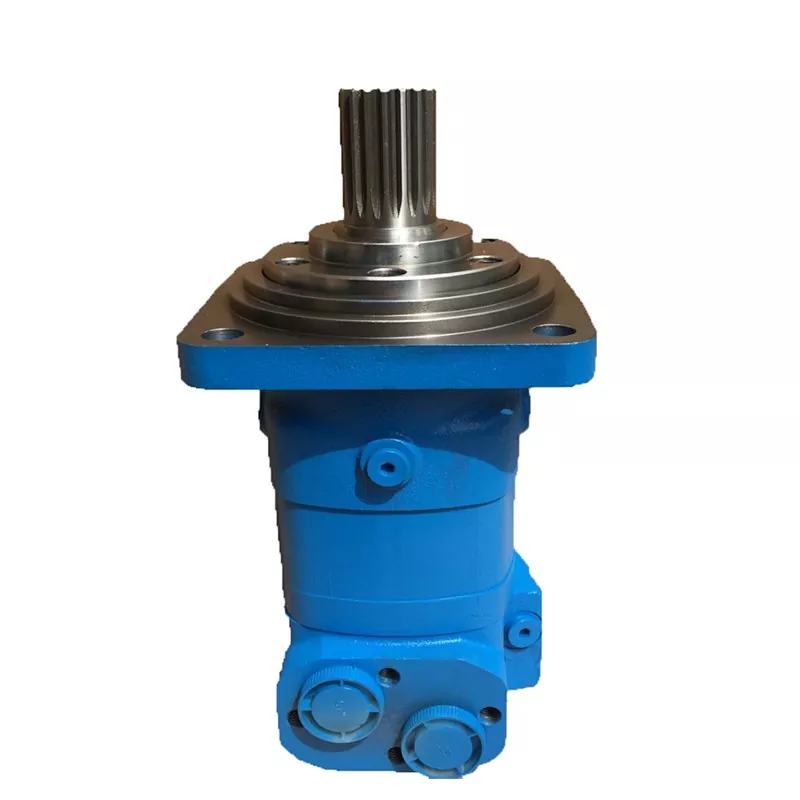
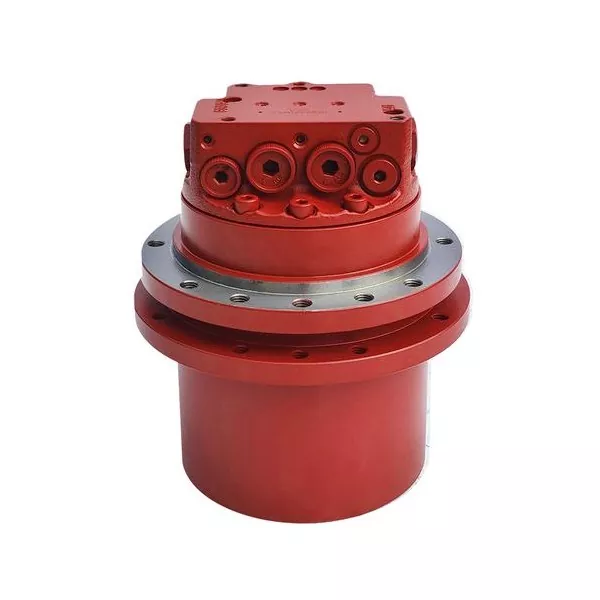
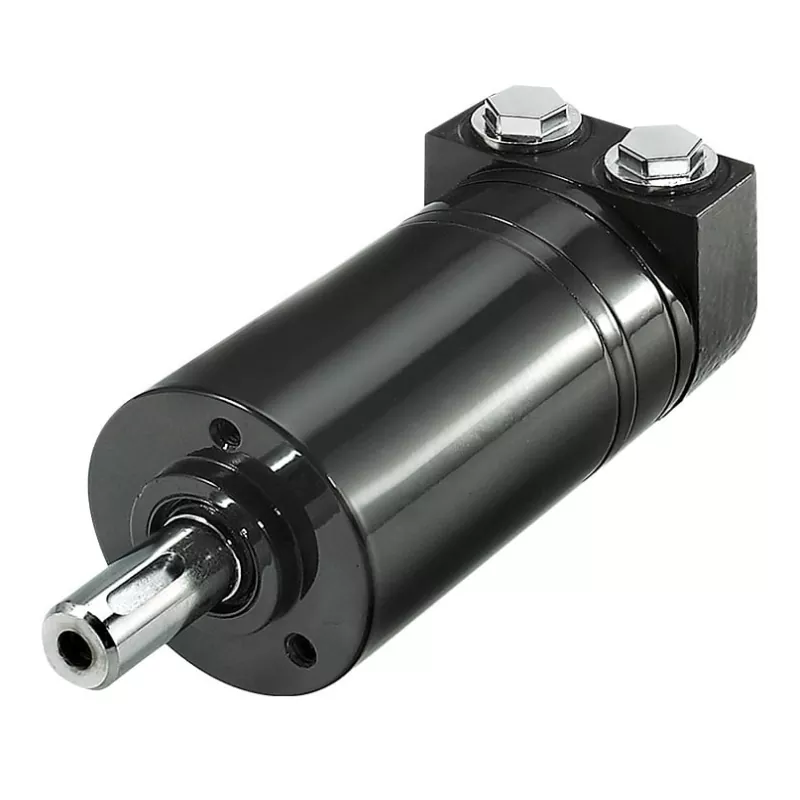
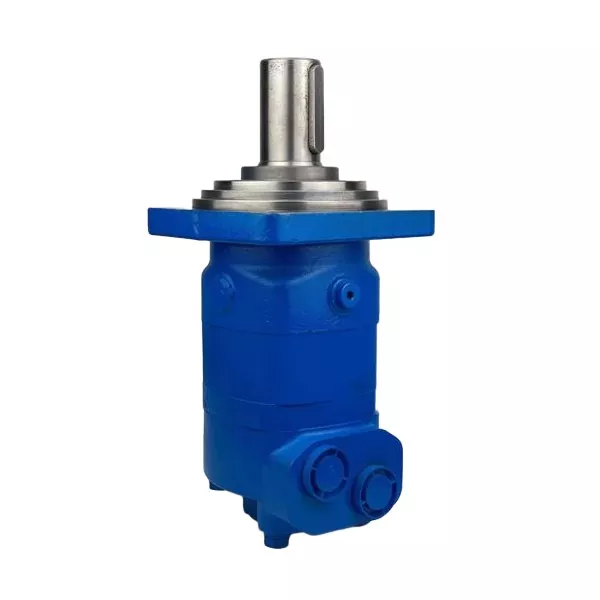
In industrial transmission systems, hydraulic motors, as key actuating components that convert hydraulic energy into mechanical energy, are widely used in numerous fields such as construction machinery, mining equipment, Marine machinery, and agricultural machinery due to their unique performance advantages. Compared with traditional power output devices such as motors and pneumatic motors, hydraulic motors demonstrate irreplaceable competitiveness in terms of power density, speed regulation performance, and load resistance capacity, making them the preferred solution for power transmission under complex working conditions.
1. Ultra-high power density, achieving "small volume, high torque"
One of the most core advantages of hydraulic motors lies in their extremely high power density, meaning they can output torque far exceeding that of motors of the same specification per unit volume or weight. Its working principle is based on the high-pressure drive of hydraulic oil, achieving rotor rotation through volume changes, without the need to rely on large iron cores and windings like motors to generate magnetic fields. Take the commonly used radial plunger hydraulic motor as an example. Under the same weight, its output torque can reach 3 to 5 times that of the traditional asynchronous motor. Under the same torque demand, the volume of a hydraulic motor is only 1/2 to 1/3 of that of an electric motor. This feature enables it to be easily adapted to space-constrained equipment, such as the slewing mechanism of excavators and the drive wheels of tracked vehicles, effectively reducing the overall volume of the machine and enhancing its flexibility.
In addition, the torque output stability of the hydraulic motor is extremely strong. Even when operating at low speeds (such as below 0.5r/min), it can still maintain uniform torque output, avoiding the "crawling phenomenon" that is prone to occur at low speeds. It is particularly suitable for scenarios that require precise control of speed and torque Such as the feed system of large machine tools and the hoisting mechanism of port cranes.
Second, wide-range stepless speed regulation, suitable for complex working conditions
Hydraulic motors have the ability to achieve stepless speed regulation under all working conditions. The speed regulation range can cover the entire range from extremely low speeds to high speeds (for some models, the maximum speed can reach over 5000r/min), and the speed regulation process is smooth and shock-free. This advantage is difficult for electric motors to match. Its speed regulation principle is achieved by controlling the flow rate (variable pump regulation) or displacement (variable motor regulation) of the hydraulic oil. It can quickly respond to load changes and adjust the output speed in real time without additional reduction mechanisms or clutches.
For instance, in the operation of construction machinery, when an excavator needs to switch from "quick transfer" to "precise excavation", the hydraulic motor can instantly reduce the rotational speed from several hundred r/min to several r/min by lowering the flow rate, while maintaining a stable torque. If a motor is to achieve the same speed regulation range, it needs to be equipped with a complex reducer and frequency conversion system, which not only increases the cost but may also affect the operation accuracy due to mechanical transmission delay.
Third, it has strong load-bearing capacity and can adapt to harsh working environments
The structural design of the hydraulic motor endows it with excellent resistance to load shock and overload by nature. Because its power transmission relies on the pressure of the hydraulic oil rather than the rigid meshing of mechanical gears, when the equipment suddenly encounters overload (such as the bucket of an excavator hitting a hard rock), the hydraulic system can release the pressure through the relief valve to prevent the internal parts of the motor from being damaged due to impact. If the motor is suddenly overloaded, it may cause the coil to burn out due to a sudden increase in current, or mechanical failure may occur due to the gearbox getting stuck.
Meanwhile, the sealing structure and material selection of the hydraulic motor enable it to adapt to harsh working environments such as dust, humidity and high temperature. For instance, hydraulic motors used in mining can operate stably for a long time under conditions of high dust concentration and an ambient temperature of over 60℃. If the motor is exposed to the same environment, additional complex dust-proof, water-proof and heat dissipation devices need to be installed; otherwise, short circuits or insulation aging problems are likely to occur. In addition, the vulnerable parts of hydraulic motors (such as seals and bearings) are easy to replace, and the maintenance cost is much lower than that of coil repair or major overhauls of gearboxes of motors.
4. High transmission efficiency and reduced energy consumption
Under medium and high load conditions, the transmission efficiency of hydraulic motors is significantly higher than that of traditional mechanical transmission systems. Its efficiency is mainly reflected in two aspects: First, the energy loss of hydraulic transmission is small. When the hydraulic oil flows in a closed pipeline, the pressure loss along the way and the local pressure loss can be controlled within 5% to 10% by optimizing the pipeline design. Second, the variable hydraulic motor can adjust its displacement in real time according to the load demand, avoiding the energy waste caused by "a big horse pulling a small cart".
Taking the lifting system of large dump trucks as an example, when a variable hydraulic motor is used for driving, if the load is relatively light at the initial stage of the truck body lifting, the motor can automatically increase the displacement and speed to quickly complete the lifting action. When the carriage is lifted to a high position and the load increases, the motor reduces displacement and increases torque while maintaining stable power. The energy utilization rate throughout the process can reach over 85%. However, if a constant-speed motor is used in combination with a reducer for driving, it is necessary to frequently start and stop the motor or adjust the clutch to adapt to the load changes. The energy utilization rate is only 60% to 70%, and long-term operation will lead to a large amount of energy waste.
Five. Modular design, flexibly adapted to multiple scenarios
Modern hydraulic motor products generally adopt a modular design concept, which can flexibly combine variable mechanisms, braking devices, output flanges, sealing systems and other accessories according to the requirements of different application scenarios, achieving "one core, multiple configurations". For instance, for the same model of hydraulic motor, by replacing different output shafts (such as splined shafts or flat key shafts), it can meet the connection requirements of various equipment like construction machinery, ships, and machine tools. By installing built-in brakes, the safety braking requirements of equipment such as cranes and elevators can be met. By matching with servo valves, high-precision speed and position control can be achieved, meeting the demands of automated production lines.
In addition, hydraulic motors can also be combined with hydraulic pumps, hydraulic cylinders, control valves and other components to form a complete hydraulic system, creating an integrated solution from the power source to the actuator end. For instance, in the propulsion system of a shield machine, multiple hydraulic motors can operate in coordination through synchronous control technology, precisely controlling the propulsion direction and speed of the shield machine without the need for complex mechanical linkage mechanisms, significantly enhancing the reliability and maintainability of the system.
Summary: Hydraulic motor - the preferred choice for power transmission in complex working conditions
In conclusion, hydraulic motors, with their ultra-high power density, wide-range stepless speed regulation, strong load resistance capacity, high transmission efficiency and flexible modular design, demonstrate comprehensive advantages far exceeding those of traditional motors and pneumatic motors in scenarios that require high torque, high stability and adaptability to harsh environments. Whether it is the efficient operation of construction machinery, the heavy-load operation of mining equipment, or the stable drive of Marine machinery, hydraulic motors can provide core power support for equipment with reliable performance, low maintenance costs and high energy utilization rates, and have become indispensable key equipment in modern industrial transmission systems. With the deep integration of hydraulic technology and intelligent control, hydraulic motors will continue to be upgraded in terms of precise control, energy conservation and consumption reduction in the future, further expanding their application space in new energy, intelligent manufacturing and other fields.
Previous :
-
Related News
- How Are High-Speed Hydraulic Motors Improving Industrial Equipment Performance?
- How Are Gear Hydraulic Motors Advancing Modern Machinery?
- Oscillating Hydraulic Motors: How Do They Work and Where Are They Used?
- How to Select, Install, and Maintain Rotary Orbital Hydraulic Motors for Maximum Service Life?
- Hydraulic Motor Won't Cooperate? These On-Site Fixes Beat Calling the Dealer
- Small Orbital Hydraulic Motors: How to Choose the Right Compact Power Solution for Your Equipment
Leave me a message