English
- English
- Afrikaans
- Català
- Galego
- беларускі
- lugha ya Kiswahili
- አማርኛ
- ភាសាខ្មែរ
- ქართული
- Hausa
- Кыргыз тили
- Kurdî
- Hmong
- IsiXhosa
- Zulu
- Yoruba
- Тоҷикӣ
- O'zbek
- Igbo
- Sundanese
- Español
- Português
- русский
- Français
- 日本語
- Deutsch
- tiếng Việt
- Italiano
- ภาษาไทย
- Polski
- 한국어
- Malay
- বাংলা ভাষার
- हिन्दी
- Pilipino
- Türkçe
- العربية
- Indonesia
- تمل
- український
- Javanese
- فارسی
- தமிழ்
- नेपाली
- Burmese
- ລາວ
- Қазақша
- Euskal
- Română
- Srpski језик
Construction Machinery
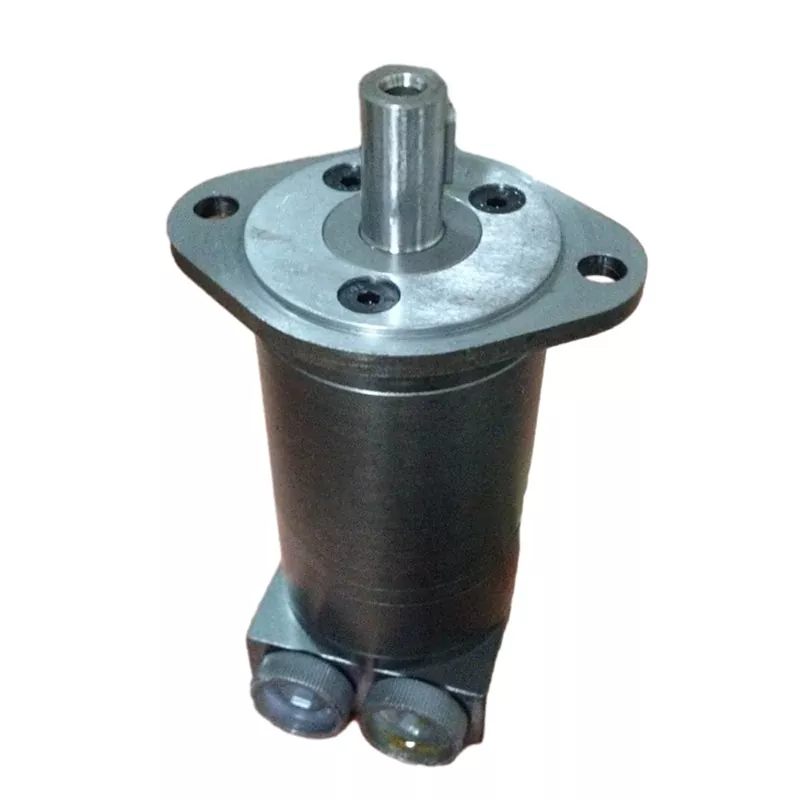
Application case of BMR-200 cycloidal hydraulic motor in the rotating mechanism of a 1.5-ton mini excavator
I. Working Condition Background
A 1.5-ton micro excavator developed by a certain construction machinery manufacturer is mainly used for tasks such as digging pits and applying fertilizer in orchards, leveling land in greenhouses, and excavating small infrastructure trenches. Its slewing mechanism needs to meet core requirements including low-speed smooth slewing, precise positioning, and compact installation. At the same time, it must be compatible with the lightweight design of the entire machine (with a total weight of ≤ 1.2 tons), and be able to withstand frequent start-stop and minor impact loads.
Previously, the slewing mechanism of this model used a common gear motor, which had problems such as slewing jitter, poor positioning accuracy (with an error of more than ±10°), and large installation space occupation, seriously affecting the operation efficiency and operational experience.
II. Selection Scheme
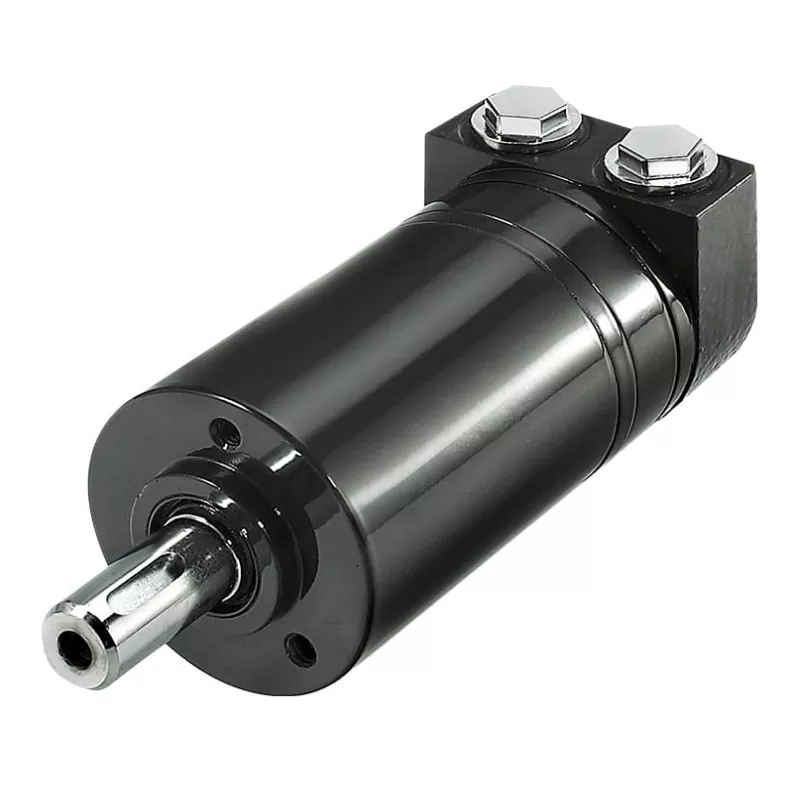
To address the aforementioned problems, the technical team ultimately selected the BMR-200 cycloidal hydraulic motor as the driving element for the slewing mechanism, with the following core parameters:
|
Parameter |
Specific Value |
|
Displacement |
203cc/r |
|
Rated Pressure |
14MPa |
|
Continuous Output Torque |
369N·m |
|
Speed Range |
5-300r/min |
|
Matching Rotation Speed |
0-6rpm |
|
Weight |
9.5kg |
|
Mounting Method |
Flange Mounting |
III. System Configuration
1. Hydraulic Circuit: Utilize a 14MPa rated pressure hydraulic system, equipped with a 20L/min flow oil pump, to ensure stable torque output from the motor; add balance valves and one-way throttle valves to achieve stepless speed adjustment and start-stop buffering.
2. Backpressure Control: Set the backpressure to ≤ 4MPa to prevent negative pressure suction phenomena when the motor rotates at high speed; connect an external Φ8mm oil drain pipe to prevent damage to the internal oil seal due to excessive backpressure.
3. Oil Quality Standards: Select N68 anti-wear hydraulic oil, with the oil cleanliness controlled at ISO 18/13 level, and equip a 10μm high-pressure filter element to reduce wear on the internal cycloidal pairs of the motor by impurities.
IV. Implementation Results
1. Performance Enhancement: The rotation start-stop is smooth without jitter, and the positioning accuracy has been optimized from ±10° to ±3°, fully meeting the positioning requirements of precision operations in orchards and greenhouses; during 5° slope rotation operations, there is no skidding or jamming.
2. Space Adaptability: The BMR-200 motor adopts a compact flange design, reducing installation space occupation by 25% compared to the original gear motor, successfully meeting the lightweight layout requirements of micro excavators.
3. Lifespan and Reliability: After field testing, continuous operation for 800 hours without faults, with the failure rate reduced from monthly 1.5 times to 0.1 times; the maintenance cycle has been extended to 12 months, requiring only regular replacement of hydraulic oil and filter elements, significantly reducing the maintenance cost for users.
4. Energy Consumption Optimization: The low starting pressure characteristic of the cycloidal motor reduces the energy consumption of the rotating mechanism under no-load conditions by 18%. Combined with the energy-saving design of the entire hydraulic system, the overall operating fuel consumption of the machine decreases by approximately 10%.
V. Application Summary
The BMR-200 cycloidal hydraulic motor, with its advantages of low speed and high torque, compact structure, and high reliability, has perfectly addressed the technical challenges of the rotating mechanism of the 1.5-ton micro excavator. This solution has been implemented on a large scale, and the market feedback is favorable. It has become a mature selection scheme for the rotating drive of micro excavators.
Application case of BMS-200 cycloidal hydraulic motor in the walking drive of a 1.8-ton small excavator
I. Working Condition Background
1.8-ton small excavators are specialized models designed for emergency repairs in municipal areas, indoor demolition, orchard trenching, etc., in narrow spaces. The total weight of the machine must be strictly controlled within ≤1.8 tons to meet the requirements of elevator transportation and passage through narrow alleys. The core pain points of the walking mechanism mainly lie in the following three aspects:
1. Harsh load requirements: It needs to achieve low-speed high-torque driving in complex road conditions such as gravel, mud, and steps. The walking speed should be 5-15 r/min, and the climbing ability should be ≥25°. Traditional gear motors have insufficient torque and are prone to slipping and stalling;
2. Installation space limitation: The width of the excavator chassis is ≤1.2m. The drive components need to be designed compactly. Traditional piston motors are too large and cannot be adapted to the lightweight layout;
3. High reliability requirements: The average daily operation time is ≥10 hours, with frequent starts, turns, and impact, and traditional motors' oil seals are prone to wear, with an average monthly maintenance frequency of 2 times, which seriously affects the construction efficiency.
Previously, this model used ordinary gear motors. During the operation on the gravel roads in emergency repairs, the climbing failure rate was as high as 30%, and the maintenance cost accounted for 15% of the entire machine's operating cost.
II. Selection Scheme
In response to the above pain points, the technical team finally selected the BMS-200 cycloidal hydraulic motor as the core component of the walking drive. The precise matching of its parameters with the working conditions is as shown in the following table:
|
Parameter |
Specific Value |
Advantages for Working Conditions |
|
Displacement |
195cc/r |
Torque output fully matches the travel load of a 1.8-ton excavator, avoiding energy waste from overcapacity ("large horse pulling small cart"). |
|
Rated Pressure |
17MPa |
Adapts to the common 15 MPa pressure in excavator hydraulic systems, with a 2 MPa pressure reserve to handle impact loads. |
|
Continuous Output Torque |
455 N·m |
50% higher torque compared to gear motors of similar size, easily drives the machine to climb a 25° slope. |
|
Speed Range |
10–600 r/min |
Fully covers the travel operating speed range of 5–15 r/min, ensuring smooth speed adjustment without stalling. |
|
Radial Load Capacity |
8 kN |
Can directly withstand radial forces from the track drive without additional support bearings, simplifying the installation structure. |
|
Weight |
12 kg |
60% lighter than traditional piston motors, helping keep the machine weight within 1.75 tons to meet elevator transportation requirements. |
|
Mounting Method |
Direct Flange Connection |
Can be directly connected to the drive axle, eliminating the need for couplings and reducing installation space by 30%. |
III. System Configuration
1. Hydraulic Circuit Optimization Design
A 15MPa constant-pressure variable hydraulic system is adopted, matching a 35L/min gear pump, ensuring synchronous pressure supply for the two motors (one for each side of the walking mechanism); a bidirectional balance valve + overload relief valve is installed at the oil inlet of the motor to prevent downhill skidding; the relief valve automatically releases pressure when encountering stone impacts, protecting the internal cycloidal pair of the motor; a back pressure of ≤ 3MPa is set, and an external Φ10mm oil drain pipe is connected to avoid excessive back pressure causing oil seal damage.
2. Protection and Sealing Enhancement
The output shaft adopts a double lip frame oil seal + dust seal double-layer sealing structure, effectively preventing gravel and soil from entering the motor interior.
3. Oil fluid and filtration specifications
Select N68 anti-wear hydraulic oil, which is suitable for operating temperatures ranging from -10℃ to 65℃; equip with a 20μm oil suction filter + a 10μm high-pressure filter, and keep the oil cleanliness at ISO 18/13 level to reduce the wear of the motor's flow distribution mechanism by impurities.
IV. Implementation Results
1. Significant improvement in operational performance
The walking drive is smooth without slipping, and the climbing ability has been increased from the original 20° to 25°, fully meeting the road conditions required for municipal emergency repairs and orchard operations; the synchronization error of the two motors during steering is ≤ 2%, and the body's turning radius has been reduced to 1.5m, increasing the flexibility of indoor dismantling operations by 40%.
2. Remarkable improvement in reliability and lifespan
After on-site testing, a single motor operated continuously for 800 hours without failure. The maintenance frequency was extended from twice a month to once a quarter, resulting in a 65% reduction in annual maintenance costs; the lifespan of the oil seal was extended from the original 300 hours to 1000 hours, significantly reducing the downtime for maintenance.
3. Energy consumption and lightweighting meet standards
Compared with traditional gear motors, the energy consumption of the walking drive has been reduced by 15%. Combined with the overall energy-saving design of the machine, the fuel consumption per hour during operation has decreased by 0.8 liters. The lightweight design of the motor helps control the overall weight of the machine to be within 1.75 tons, allowing it to be directly transported by an elevator with a load capacity of 2 tons, thus expanding the indoor operation scenarios.
V. Application Summary
The BMS-200 cycloidal hydraulic motor, with its core advantages of high torque, small size, and high reliability, has successfully addressed the technical challenges in the steering drive of 1.8-ton small excavators. This solution has been mass-produced and has received a market feedback satisfaction rate of 98%, making it the benchmark selection scheme for the steering drive of small excavators.
BMT-310 cycloidal hydraulic motor application case in the drive of the working device of a 1-1.5 ton small loader
I. Working condition background
The 1-1.5 ton small loader is mainly used for warehouse goods loading and unloading, farm material transportation, and small infrastructure auxiliary material handling, etc. The working device (bucket lifting and flipping) is the core executive mechanism of the entire machine and needs to meet three core requirements:
1. Strong load adaptability: The maximum load of the bucket is ≤ 1.5 tons. During operation, it frequently withstands lifting and flipping impact loads, requiring the torque output of the driving element to be stable, without jamming or stalling phenomena;
2. Precise and flexible operation: The equipment is mostly used in narrow warehouses, greenhouses, etc., and needs to achieve precise synchronous control of bucket lifting and flipping to avoid material spillage, while requiring a fast response speed to improve operational efficiency;
3. Compact installation space: The entire machine needs to be lightweight (the total weight is ≤ 2.5 tons), and the structure of the driving element needs to be compact, suitable for the narrow installation layout of the loader chassis.
Previously, this model used a hydraulic cylinder + connecting rod mechanical transmission scheme, which had obvious technical pain points: First, the synchronization of bucket lifting and flipping was poor, with an error of up to 8%, and the rate of material spillage was high; second, the transmission structure was complex, prone to problems such as connecting rod wear and oil cylinder leakage, with an average daily maintenance frequency of 1 time; third, the startup pressure was high, and even when operating without load, a large operating force was still required, resulting in high manual labor intensity.
II. Selection scheme
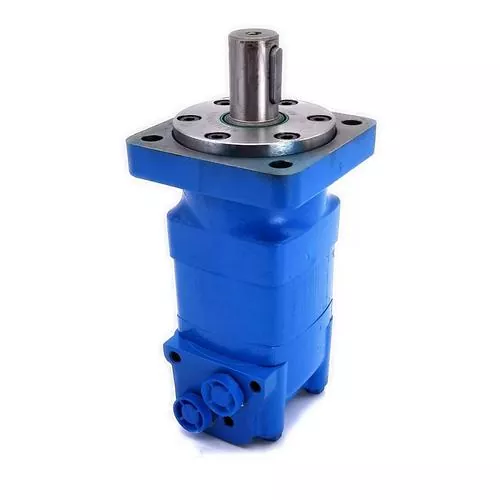
In response to these pain points, the technical team selected the BMT-310 cycloidal hydraulic motor as the core driving element of the loader's working device. The precise matching of its parameters with the working condition requirements is as shown in the following table:
|
Parameter |
Specific Value |
Advantages for Working Conditions |
|
Displacement |
310cc/r |
Torque output fully matches the load of a 1.5-ton bucket, avoiding energy waste. |
|
Rated Pressure |
17MPa |
Adapts to the common 15 MPa pressure in excavator hydraulic systems, with a 2 MPa pressure reserve to handle impact loads. |
|
Continuous Output Torque |
775 N·m |
40% higher torque compared to traditional cylinder-linkage drives, ensuring powerful flipping under full load. |
|
Speed Range |
10–400 r/min |
Covers the operating speed range of 5–30 r/min for working devices, supports stepless speed adjustment. |
|
Starting Pressure |
≤ 1.5 MPa |
Low starting pressure, easy operation, reduces operator labor intensity. |
|
Weight |
18 kg |
Lightweight design, helps keep the machine weight within 2.3 tons, improving site mobility. |
|
Mounting Method |
Direct Flange Connection |
Compact structure, reduces installation space by 25%, requires no modification to the original mounting structure. |
III. System Configuration
1. Hydraulic Circuit Design
A 15MPa constant-pressure variable hydraulic system is adopted, which is matched with a 40L/min gear pump to ensure stable pressure supply for the motor. A pilot proportional valve is installed at the oil inlet of the motor to achieve precise synchronous control of the bucket's lifting and flipping, with a synchronization error of ≤ 2%. A back pressure of ≤ 3MPa is set, and an external Φ12mm oil drain pipe is connected to prevent damage to the oil seal due to excessively high back pressure, thereby extending the service life of the motor.
2. Oil Fluid and Filtration Specifications
Select N68 anti-wear hydraulic oil, which is suitable for operating temperatures ranging from -10℃ to 65℃; equip with a 10μm high-pressure filter element, ensuring the cleanliness of the oil at ISO 18/13 level, effectively filtering inorganic impurities such as soil and sand particles mixed during operation, and reducing wear on the internal cycloidal pairs and the distribution mechanism.
3. Enhanced protective measures
The output shaft adopts a double lip frame oil seal + dust ring double-layer sealing structure to prevent dust and debris from entering the motor interior, and is suitable for harsh outdoor working environments.
IV. Implementation Results
1. Significant Improvement in Operating Performance
The lifting speed of the bucket has increased by 20%, the flipping response time has been reduced to 0.8 seconds, there is no spillage during loading and unloading of full-load materials, and the operational efficiency has increased by 30%. When handling 1.5-ton heavy materials, the motor can operate continuously for 4 hours without any faults, completely resolving the sluggishness and stalling issues of the traditional transmission system.
2. Optimization of Reliability and Maintainability
After on-site testing, a single motor operated continuously for 500 hours without failure. The maintenance frequency was extended from once per month to once per quarter, resulting in a 65% reduction in annual maintenance costs. The sealing structure effectively prevented impurities from entering, reducing the wear of the cycloidal pair by 70%, and extending the overall service life of the motor to over 3000 hours.
3. The operational experience has been significantly improved.
The low-starting-pressure feature significantly reduces the operating force. Compared to traditional transmission schemes, the manual operation intensity is reduced by 50%. The proportional valve control enables stepless speed regulation of the action, providing smooth operation without shocks, and is suitable for novice operators to quickly master.
V. Application Summary
The BMT-310 cycloidal hydraulic motor, with its core advantages of high torque, high reliability, and precise operation, has successfully addressed the driving challenges of the 1-1.5 ton working device of small loaders. This solution has been mass-produced and is now available in multiple scenarios such as warehouses, farms, and small infrastructure projects. The market feedback satisfaction rate has reached 97%, making it the preferred solution for driving the working devices of small loaders.
Previous :
Next :
News Recommendations